
The Dark Side of Faith: Understanding Misotheism in History and Literature
When people think of religion, they often imagine a spectrum from devout belief to disbelief—faith or atheism, reverence or doubt. Yet hidden in the shadows of theological discourse is a rarer, more unsettling position: misotheism—not the denial of God, but the hatred of God.
Unlike atheism, misotheism accepts the possibility of a divine being—but finds that being morally intolerable. It asks a piercing question that theology has long tried to soften: What if God exists, but is not good?
From ancient laments to postmodern literature, misotheism emerges as a powerful lens through which to understand suffering, disillusionment, and the raw honesty of spiritual crisis.
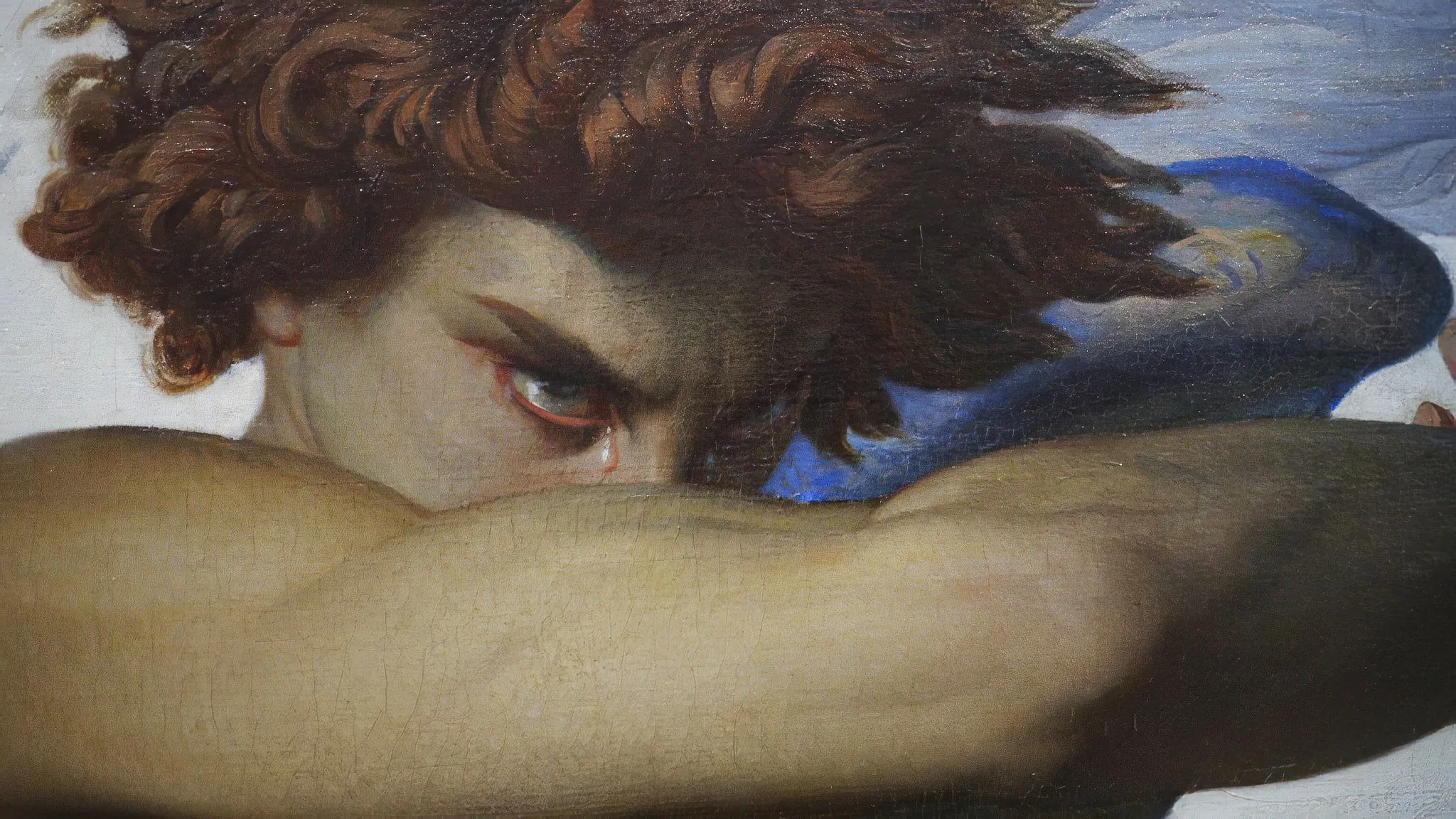
What Is Misotheism?
The word misotheism stems from the Greek misos (hatred) and theos (god). It refers to active hostility toward a deity, typically because of that deity’s perceived injustice, cruelty, or indifference.
Unlike atheists, misotheists do not deny the existence of God—they reject God's moral authority. A misotheist may be a believer, a former believer, or someone locked in spiritual confrontation. Often, they are wounded idealists, angry not because they expected nothing, but because they expected goodness—and felt betrayed.
Reference: Anderson, Bernard. “Misotheism: The Hatred of God in the Hebrew Bible.” The Journal of Religion, Vol. 68, No. 2, 1988.
Ancient Echoes: Job, Prometheus, and Divine Injustice
The roots of misotheism stretch deep into ancient thought.
In the Book of Job, we find one of the earliest and most forceful indictments of divine injustice. Job—a righteous man—loses everything at the hands of a God who remains largely silent. Though Job never renounces God outright, his words are confrontational:
“Why do the wicked live on, growing old and increasing in power?” —Job 21:7
His suffering provokes not atheism, but a moral protest.
In Greek mythology, Prometheus embodies rebellion against divine tyranny. By stealing fire and giving it to humans, he defies Zeus and is condemned to eternal torment. Prometheus represents a refusal to accept cruel or arbitrary power, even from the gods.
Both stories explore a central question: Can a god be powerful and unjust—and what then should humans do in response?
The Enlightenment and the Ethics of God
The Enlightenment introduced new intellectual tools—reason, empiricism, and secular ethics—that gave rise to misotheistic critiques.
- Voltaire, in his poem On the Lisbon Disaster, questioned how a just God could allow tens of thousands to perish in a single earthquake.
- Diderot and others rejected divine authority in favor of moral autonomy.
Later, Fyodor Dostoevsky, in The Brothers Karamazov, offered a landmark misotheistic argument. The character Ivan tells his brother that he cannot accept a God who allows children to suffer. He doesn't deny God's existence—he refuses to forgive Him.
Reference: Dostoevsky, Fyodor. The Brothers Karamazov, especially the chapter “Rebellion.”
This marked a shift: misotheism became not just a philosophical stance but a moral argument.
Modern Misotheism: Literature, War, and Existential Despair
The 20th century—with its wars, genocides, and existential crises—brought misotheism into sharper focus.
- Elie Wiesel, in Night, describes a young boy being hanged in a concentration camp. When someone asks, “Where is God now?” Wiesel writes: “Here He is—He is hanging here on this gallows.”
- Philip Pullman, in His Dark Materials, imagines a universe where “The Authority” (God) is a decaying, corrupt being. His characters rise not to destroy belief, but to reclaim morality from divine tyranny.
These texts reflect a deep emotional tension: not the absence of faith, but the faithful confrontation of God’s failures.
References: Wiesel, Elie. Night. Pullman, Philip. The Amber Spyglass.
Misotheism vs. Theodicy
The theodicy tradition attempts to explain how a good God can allow evil to exist—often suggesting that suffering has divine purpose. Misotheism rejects these justifications outright.
For the misotheist:
- Evil is not redeemed by divine plan.
- Suffering is not a spiritual lesson.
- Justifying cruelty with mystery is itself immoral.
Yet misotheism is not nihilism. It often comes from a place of deep moral conviction—a demand that the divine be held to ethical standards. In that sense, it speaks with a prophetic voice.
Why Misotheism Matters Today
We live in a time marked by climate anxiety, political violence, and spiritual fatigue. In this climate, misotheism provides a language for those who feel betrayed by faith traditions but are not ready to abandon the idea of the sacred entirely.
Misotheism teaches us:
- That anger can be sacred.
- That protest is a form of engagement, not rejection.
- That questioning God does not make one godless—it makes one morally awake.
In this way, misotheism resonates with aspects of liberation theology, prophetic lament, and even civil disobedience.
Conclusion: The Faith to Hate God
To hate God is, paradoxically, to still care. Misotheism is not the endpoint of belief, but a passage through grief, rage, and mourning. Whether voiced through Job, Ivan Karamazov, or a Holocaust survivor, it insists that theology confront the full weight of human suffering.
Misotheism may be radical, but it is not empty. It speaks to the limits of doctrine, the power of honesty, and the enduring desire for a world that is just—even if the heavens are not.
In a world that often silences uncomfortable questions, misotheism dares to ask the most dangerous one: If God exists, why does He allow this? And in asking it, perhaps it keeps faith alive—not in spite of the darkness, but through it.
Suggested Further Reading
- Kearney, Richard. Anatheism: Returning to God After God
- Eagleton, Terry. Culture and the Death of God
- Anderson, Bernard. “Misotheism: The Hatred of God in the Hebrew Bible.”
- Grayling, A.C. Against All Gods: Six Polemics on Religion and an Essay on Kindness